Which Ayurvedic Therapies May Be Helpful for Arthritis?
Do your joints hurt, or does your body feel stiff when you wake up in the morning? Is it really just because of age?
Joint pain is a common concern for many people and can affect their day-to-day activities. Pain, stiffness, a feeling of heaviness, or difficulty moving may be experienced in the knees, lower back, neck, shoulders, or other joints of the arms and legs.
For some people, these problems may occur occasionally, while for others, they may keep coming back. This may make everyday activities such as walking, climbing stairs, or doing routine household work uncomfortable.
According to Ayurveda, Vata dosha is considered to play an important role in some joint-related conditions. Therefore, a person’s Prakriti, daily routine, symptoms, and overall health are considered before choosing an appropriate treatment approach.
In such situations, Panchakarma or other Ayurvedic therapies may be considered for some patients. However, the same approach may not be suitable for everyone. It is therefore important to consult a qualified Ayurvedic professional before starting any therapy.
What Is Arthritis?
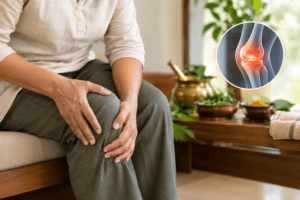
Arthritis refers to a group of conditions that can affect the joints and may involve pain, stiffness, swelling, or difficulty with movement. Some people may experience more stiffness in the morning, although the pattern and severity of stiffness can vary depending on the type and cause of the joint condition.
Swelling around the joints, reduced range of movement, or increased pain while using a particular joint may also occur in some people.
However, joint pain can have different causes, and not every case of joint pain is due to arthritis. Instead of trying to identify the condition based only on symptoms, it is important to understand the underlying cause of the problem.
Why May Ayurvedic Therapies Be Considered in Arthritis?
According to Ayurveda, Vata dosha is considered important in certain joint-related conditions. The choice of therapy may therefore depend on the person’s Prakriti, symptoms, and overall health.
Factors such as age, physical strength, daily routine, severity of symptoms, and other health concerns are also taken into consideration.
This is why experiencing joint pain does not mean that the same Panchakarma therapy or Ayurvedic treatment is suitable for everyone.
Which Ayurvedic Therapies May Be Considered for Arthritis?
Different Ayurvedic therapies may be considered depending on the individual’s condition, symptoms, and overall health.
Abhyanga
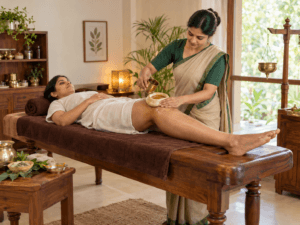
Abhyanga involves applying herbal or medicated oil to the body or a specific area of concern through massage. In some patients, it may be used to help manage stiffness around the joints or tension in the muscles.
Swedana
Swedana involves providing appropriate therapeutic heat to the body. In certain situations, it may be considered to help with feelings of heaviness and stiffness around the joints.
However, if there is swelling or any other specific symptom, a qualified Ayurvedic professional should determine whether Swedana is appropriate.
Janu Basti
Janu Basti may be considered for certain knee-related complaints. In this therapy, medicated oil is kept around the knee for a specific period using a specialised method.
Whether it is appropriate depends on factors such as the cause of knee pain, swelling, severity of symptoms, and the person’s overall condition.
Kati Basti
Kati Basti may be considered for some people experiencing discomfort or stiffness in the lower back. In this procedure, medicated oil is kept over a specific area of the lower back for a certain period.
However, Kati Basti is not necessarily required for every type of back pain.
Basti Chikitsa
In Ayurveda, Basti Chikitsa is given importance in certain conditions associated with Vata dosha. However, it may not be suitable for every patient.
The need for Basti and the appropriate type of therapy should be decided by a qualified Ayurvedic professional after considering the person’s Prakriti, age, physical strength, symptoms, and overall health.
Can Panchakarma Help Manage Joint Pain?
This depends on the individual’s condition and the underlying cause of the joint problem.
Joint pain can have different causes. Therefore, it would not be appropriate to assume that one therapy alone will permanently resolve the problem.
Along with any treatment, it is also important to pay attention to daily habits. Physical activity, weight, sleep, and diet can all have an impact on overall health.
Why Is Daily Routine Important Along With Treatment?
Paying attention to everyday habits can also help in managing joint-related discomfort.
- Avoid sitting in the same position for long periods.
- Keep your body appropriately active.
- Follow exercises recommended by a qualified Ayurvedic professional or other appropriate healthcare professional.
- Try to maintain a healthy weight.
- Get adequate sleep and rest.
- Avoid unnecessary physical strain during daily activities.
Small and consistent changes in daily habits may help make everyday activities more comfortable.
Why Is the Same Approach Not Suitable for Everyone?
Every person’s Prakriti, age, physical capacity, and symptoms can be different.
A therapy that may be suitable for one person may not be equally appropriate for another. Therefore, treatment should not be decided simply by looking at the name of the condition. The person’s overall health and the underlying cause should also be considered.
What Should You Keep in Mind Before Starting Treatment?
If you have joint pain, do not start Panchakarma or any Ayurvedic therapy on your own.
In particular, seek appropriate professional guidance if you experience:
- Sudden or severe joint pain
- Significant swelling
- Severe difficulty while walking or moving
- Joint pain that begins after an injury
- Fever or other symptoms along with joint pain
In such situations, it is important to understand the possible cause before deciding on an appropriate treatment approach.
A Final Thought
When it comes to arthritis or joint pain, there is no single approach that works for everyone.
Ayurvedic therapies such as Abhyanga, Swedana, Janu Basti, Kati Basti, and Basti may be considered for some patients. These therapies may be used as part of an individualized Ayurvedic treatment plan, depending on the patient’s condition.
The appropriate approach should be decided by a qualified Ayurvedic professional after considering the person’s Prakriti, symptoms, age, daily routine, and overall health.
If joint pain keeps coming back or starts affecting your daily activities, do not ignore it. Seek appropriate professional guidance to understand the condition and explore suitable treatment options.
Aaptashri Ayurveda & Panchakarma Clinic, Pune
Dr. Saurabh B. Kadam, M.D. (Ayu)
Shop No. 2 to 4, 1st Floor, Sneh Mithila Apartment,
31/1 Kashave Nagar, Next to Swaraj Garden Hotel,
Bhosari Road, Pimple Saudagar, Pimpri, Pune – 411027, Maharashtra.
Contact: +91 73877 93189 | +91 96650 10500